
Donald Trump expressed confidence in a swift victory over Iran, suggesting military strikes before midterm elections are possible, with the primary goal of denying Tehran nuclear weapons. Meanwhile, Iranian Foreign Minister Seyyed Abbas Araghchi declared readiness for a "doomsday war" if hostilities resume, while also expressing openness to diplomacy if assets are unfrozen and oil sales allowed.

US President Donald Trump on Saturday said there is a possibility that an attack on Iran could happen soon. The remarks were made after Trump cast his ballot in the midterm elections early on Saturday in Florida.

US President Donald Trump has met with his national security team to discuss resuming military operations against Iran, with senior officials confirming preparations are being finalised for potential major operations, while Iraq has warned against using its territory for strikes.

The United States has reportedly conducted a clandestine military operation targeting Iran's Qeshm Island, part of a series of limited attacks against Tehran. This strike occurred on Monday, shortly after US President Donald Trump suggested a deal with Iran was possible, despite ongoing military actions. US officials indicate these strikes are kept minimal and secret to avoid escalating to a wider military campaign. The incident follows previous US actions and Iran's report of capturing a US drone.

The Iranian embassy also posted a video purportedly showing the aftermath of the strike, with plumes of smoke visible.

US President Donald Trump announced he halted planned military strikes on Iran following requests from Qatar, Saudi Arabia, and the UAE, citing ongoing discussions that could lead to a deal.

Hours after warning that the United States could strike Iran "very hard tonight", President Donald Trump announced to halt planned military action, despite earlier threats to target Kharg Island and other key Iranian oil facilities.

Dozens of US planes carrying ammunition landed in Tel Aviv, raising concerns about potential strikes on Iran. Negotiations between the US and Iran remain deadlocked over key issues, with both sides issuing fresh demands and warnings.

Russian President Vladimir Putin has condemned US and Israeli military aggression against Iran, including strikes on its nuclear facilities, and offered Russia's support to end the ongoing conflict in West Asia, according to Iran's security chief Major General Mohsen Rezaei.

Rice exporters in Haryana are facing potential payment delays and shipment disruptions to Iran and Afghanistan following recent military strikes on Iran.

The United States military has developed fresh strike options against Iran that include the potential use of the GBU-43/B Massive Ordnance Air Blast (MOAB), widely known as the "mother of all bombs", to target energy infrastructure and nuclear sites, CNN reported, citing multiple US officials familiar with military planning discussions.
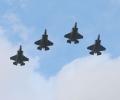
The United States has evacuated American aircraft from an air base in the UK following a threat from Iran, according to people familiar with the matter, raising fresh concerns over the security of US military assets amid the ongoing conflict.

The United States Central Command announced strikes against Iranian military targets, including air defence and communication sites, in retaliation for alleged attacks on commercial shipping and US personnel. However, Iran's Foreign Ministry claims these strikes caused over 50 civilian casualties at a wedding and vowed a firm response. Iran's state media also reported retaliatory ballistic missile and drone attacks on US bases in Jordan and Bahrain, claims which were partially corroborated by Kuwait and Jordan reporting intercepted drones and missiles.

Major General Mohsen Rezaei, Secretary of Iran's Supreme National Security Council, has issued a stark warning that Tehran would target all US military bases, including distant installations in Europe, if Washington launches another 'attack' on Iran. He also stated that Iran would not transfer its enriched nuclear material abroad and was awaiting a clear response to its seven conditions for diplomatic engagement.
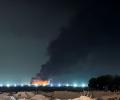
Iran's Islamic Revolutionary Guard Corps (IRGC) says its forces carried out a drone attack targeting a US radar system located at a military base in Bahrain, according to an official release broadcast by Iranian state media.

Vance was sceptical about the war against Iran and was the only figure in Trump's circle who refused to endorse Benjamin Netanyahu's bid for re-election as prime minister, points out Ambassador M K Bhadrakumar.

French authorities have formally accused Iran of orchestrating an "unprecedented" cyberattack campaign targeting supermarket refrigeration networks across the country, causing massive food spoilage and equipment fires, and are now pushing for European Union sanctions against Tehran.

United States Central Command (CENTCOM) forces have disabled a commercial cargo vessel in the Gulf of Oman using precision airstrikes after the ship's crew repeatedly ignored warnings and attempted to breach an active naval blockade against Iran, the US military confirmed in an official statement.

A US federal court has sentenced Pakistani national Asif Merchant to 27 years and six months in prison for attempting to orchestrate the assassination of American government officials, including then-President Donald Trump, on behalf of Iran's Islamic Revolutionary Guard Corps (IRGC). Merchant, described as a trained IRGC operative, was convicted of attempting to commit an act of terrorism transcending national boundaries and murder for hire.

For years, these two powers operated as "frenemies" in the shadow of Iran's regional influence. The frame here is "The Enemy of My Enemy."

The US has informed allies it will avoid new military strikes on Iran, instead focusing on economic sanctions and maritime enforcement, particularly in the Strait of Hormuz. This strategic shift aims to intensify pressure on Tehran's economy and oil exports while keeping the military option open if Iran initiates aggression. Diplomatic efforts continue amidst persistent regional tensions and maritime incidents.

In a post on Truth Social, Trump said the decision followed a request from the Iranian government and added that talks between the two sides were 'going very well'.

US President Donald Trump stated that the US still needs to address "one or two targets" in Iran, specifically mentioning a site like Pickaxe Mountain, claiming it could be done in 10 minutes. This comes as Iranian Supreme Leader Mojtaba Khamenei warned of an "unrestricted" response to any US or Israeli missteps. Despite the tough talk, diplomatic channels remain open, with both sides acknowledging ongoing talks, though Trump expressed skepticism about Iran's reliability in negotiations.

The United States is facing growing discontent from its Gulf allies after several countries in the region complained that they were not given advance notice of the US-Israel strike on Iran that triggered widespread retaliatory attacks, according to media reports.

Donald Trump has ruled out using nuclear weapons or ground troops against Iran, despite the US military developing strike options including the "mother of all bombs" (MOAB) for Iranian energy and nuclear facilities. Trump clarified the MOAB is not nuclear and expressed confidence in non-nuclear options. He also discussed nuclear disarmament talks with Russia and China and his determination to prevent Iran from acquiring nuclear weapons, even as questions arise about MOAB's effectiveness against deeply buried targets.

Iran's Islamic Revolutionary Guard Corps (IRGC) has launched missile and drone strikes on four US military bases in Kuwait and Bahrain. This action is in retaliation for recent American strikes against targets in Iran, which the IRGC condemned as a "violation of commitments" and an "anti-civilian act." The IRGC has warned of an expanded "crushing response" if US aggression continues.

Axios has reported that a new US intelligence report has found that Iran has "substantially increased" its efforts to target American diplomats and officials in the Middle East. The intel memo which Axios cited also said that plots against American diplomats were reaching "advanced stages."

Iran's Islamic Revolutionary Guard Corps (IRGC) has claimed responsibility for missile and drone strikes on US military installations in Bahrain, describing the operations as the second phase of its retaliatory campaign. This announcement follows US Central Command (CENTCOM) confirming its own large-scale offensive targeting Iranian military infrastructure.

The United States has launched a fresh wave of airstrikes against Iran's Islamic Revolutionary Guard Corps (IRGC) in response to a deadly attack in Jordan that claimed the lives of two American service members, aiming to curb Tehran's maritime threats.

Iranian Parliament Speaker Mohammad Bagher Ghalibaf has interpreted the US midterm election results as a clear rejection of conflict by the American public, stating, "Americans said NO TO WAR, and we endorse this message." This comes as Democrats are poised to take control of the US Congress, securing the Senate and gaining seats in the House of Representatives.

The US rejected Iran's proposal to reopen the Strait of Hormuz, citing Tehran's demands for sanctions relief and access to frozen assets before nuclear program negotiations. US Ambassador Mike Waltz called the offer a "cynical attempt," while Iranian Foreign Minister Seyyed Abbas Araghchi disputed Waltz's account and reiterated Iran's readiness for both diplomacy and renewed hostilities. President Trump expressed confidence in winning the conflict soon and keeping all options, including military strikes, on the table, with denying Iran a nuclear weapon as the primary objective.

Reports from the New York Post, citing Mohsen Heydari, reveal that Mojtaba Khamenei was "pulled from the rubble" of a Tehran hospital after alleged US and Israeli strikes. This occurred before his secret selection as Iran's new Supreme Leader by the Assembly of Experts, which was also reportedly targeted. Conflicting accounts from Donald Trump and Iranian President Masoud Pezeshkian have further shrouded Khamenei's health in mystery, with some suggesting severe injuries while others claim he is "completely" healthy.

Two members of Iran's delegation to the United Nations General Assembly in New York were "kicked out" of the United States on Saturday after allegedly failing to comply with a US State Department order to leave the country, Axios reported, citing a US official, as tensions between Washington and Tehran continue to rise amid the West Asia crisis, particularly the Strait of Hormuz.

The United States has launched a fresh wave of precision strikes, hitting approximately 90 Iranian military targets deep inside Iran, further intensifying a rapidly expanding regional conflict, with Tehran warning of severe retaliation.

Iran has conveyed seven conditions to the United States through Qatari mediators for starting negotiations to end the ongoing war, while warning that Tehran is prepared for a "decisive war" if Washington rejects its demands.

The US military has refuted Iran's Revolutionary Guards' assertion that an oil tanker struck a naval mine in the Strait of Hormuz. US Central Command stated the Panama-registered vessel, El Gaia, was previously hit by an Iranian missile and then a drone, highlighting ongoing Iranian attempts to impede commercial vessels in the crucial maritime trade route.

Iran's Islamic Revolutionary Guard Corps (IRGC) claims to have captured a US unmanned submersible near the Strait of Hormuz and launched ballistic missile strikes against a US airbase in Jordan and two US Navy destroyers. These actions are stated as retaliation for recent US attacks on Iranian oil tankers. The US Central Command (CENTCOM) had previously reported destroying Iranian crude oil carriers after IRGC missile attacks on US warships. The escalating tensions have led to regional air defence activations and warnings to tanker crews.

An Indian national was killed and two others were injured in an attack on King Fahd International Airport in Dammam, Saudi Arabia. This incident follows another attack on the Shaybah oilfield where an Indian was also injured, amidst escalating strikes by Yemen's Houthi rebels on Saudi infrastructure.

Hours after US President Donald Trump on Wednesday said that the ceasefire deal with Iran was "over", the US President indicated that Washington could launch another round of strikes against the Islamic Republic, following strikes on Tuesday, saying it had already hit Tehran "very hard" and warning of further attacks.

Iranian President Masoud Pezeshkian delivered a strong address at the UN General Assembly, rejecting US allegations against Iran and accusing Washington and Israel of aggression and terrorism. He criticised US sanctions, defended Iran's peaceful nuclear programme, and highlighted the Palestinian issue.
